Health & Wellness
A plan of action, not a data dump
Somaticode is a health and wellness company built around genetic and biochemical markers, specifically methylation. The challenge was turning a large amount of complex data into a personalized plan that was easy to understand, simple to follow, and eliminated second-guessing, for both wellness practitioners and the patients they serve.
Two audiences, one system
Practitioners needed to competently pass information on to patients while folding Somaticode's products into their existing practice without adding a second system to manage. Patients needed both modes at once: being coached by a practitioner, and going at their own pace when they wanted to self-serve.
My role went beyond designing the experience that enabled action for both groups. I leveraged no-code platforms to build the product myself. No-code development was outside my toolset going in. I learned it and built the entire ecosystem from start to finish.
Connecting symptoms with results
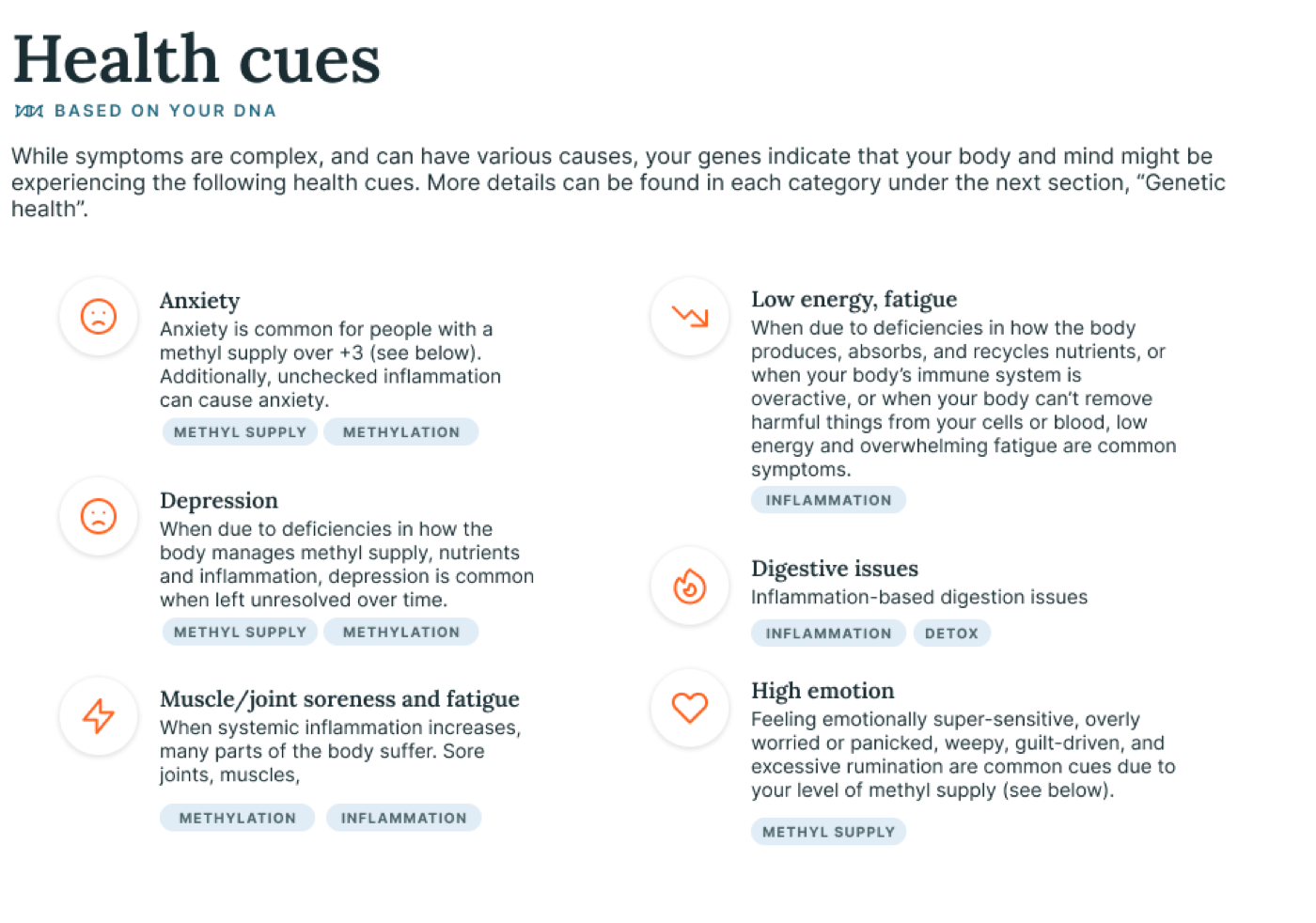
A crucial first step in improving health is connecting symptoms to test results, the moment someone can say "there's a reason I'm feeling this way." That realization was key to moving people forward. An overview of each major area of focus let users intuitively see how much each category needed work.
Built for practitioners, not just patients
Health care providers could create, manage, and export a patient's health record. The platform detected when a user was a provider and layered in education, training, and tracking on top of the standard interface, so Somaticode's products could sit inside a practitioner's existing offering rather than compete with it.
Later, I designed and shipped a beta AI tool practitioners used to query a patient's genetic data directly during consults, including the interaction model, prompt design, and how results were presented.
Mobile, for the moment of recording
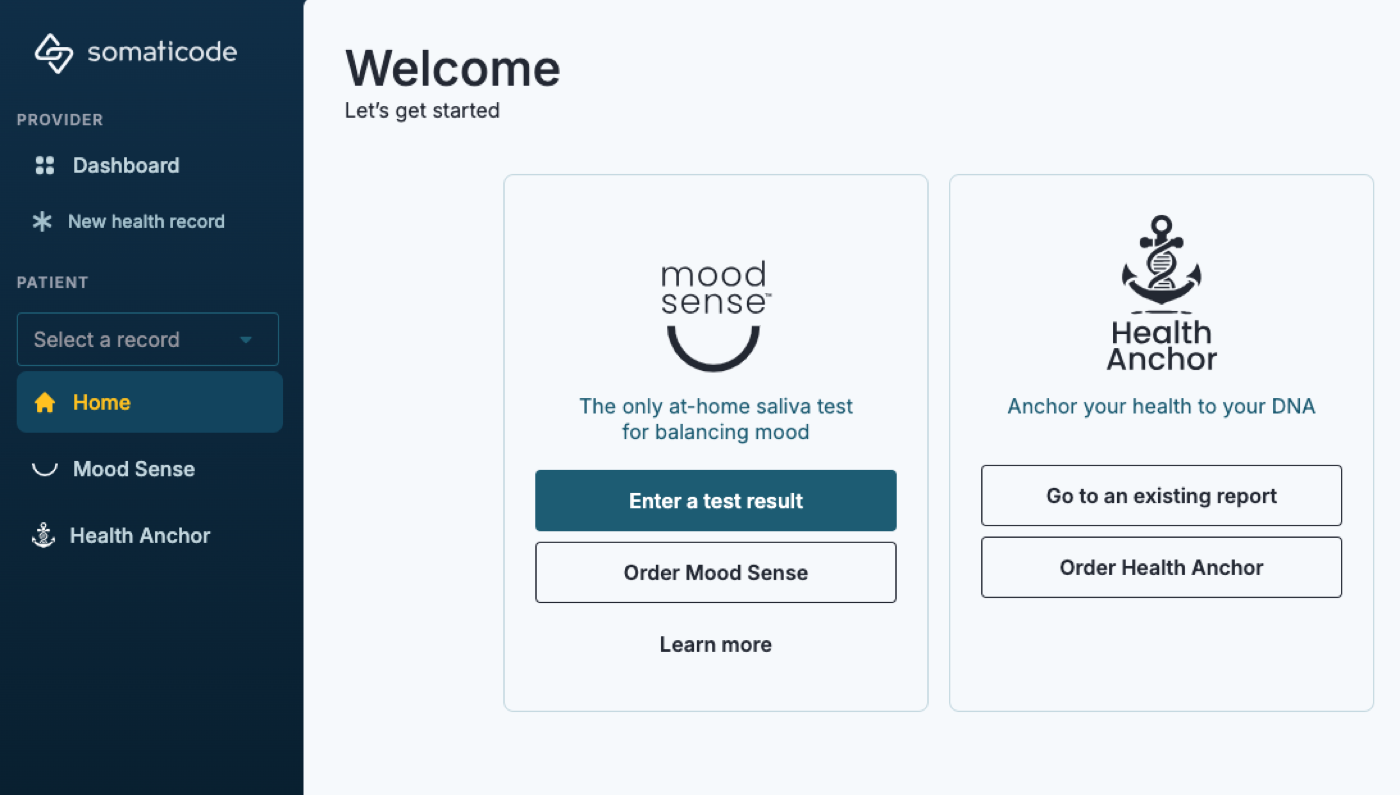
Usage was split between desktop and mobile depending on demographic, and both needed to let people digest information and take the next natural step. Recording a real-time saliva test used a slider that mimicked the physical test device, which reduced reporting errors, and easy feeling selection increased how completely people reported. After reporting, the system recommended a supplement dosage to help remedy the imbalance.
Mood Sense and Health Anchor, physical products
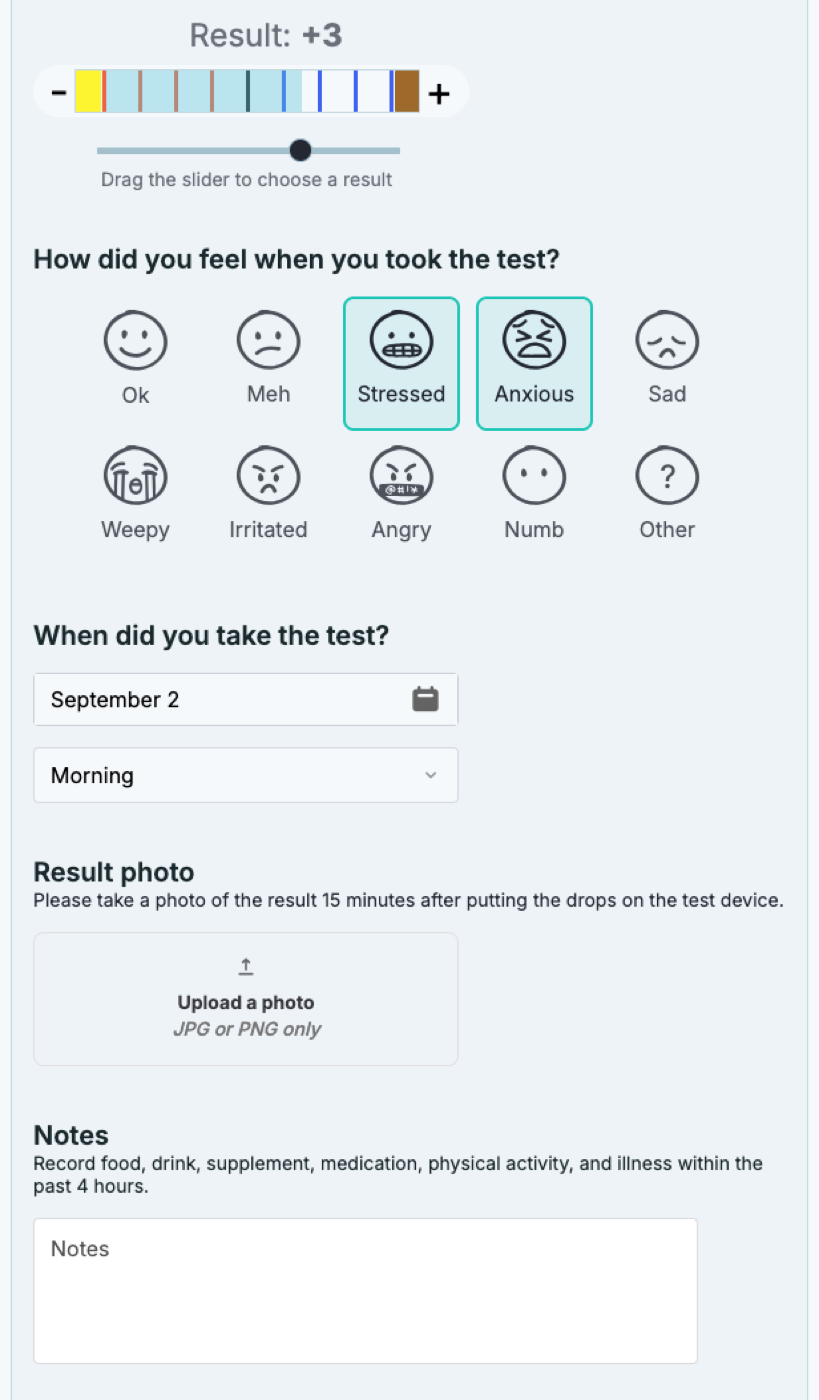
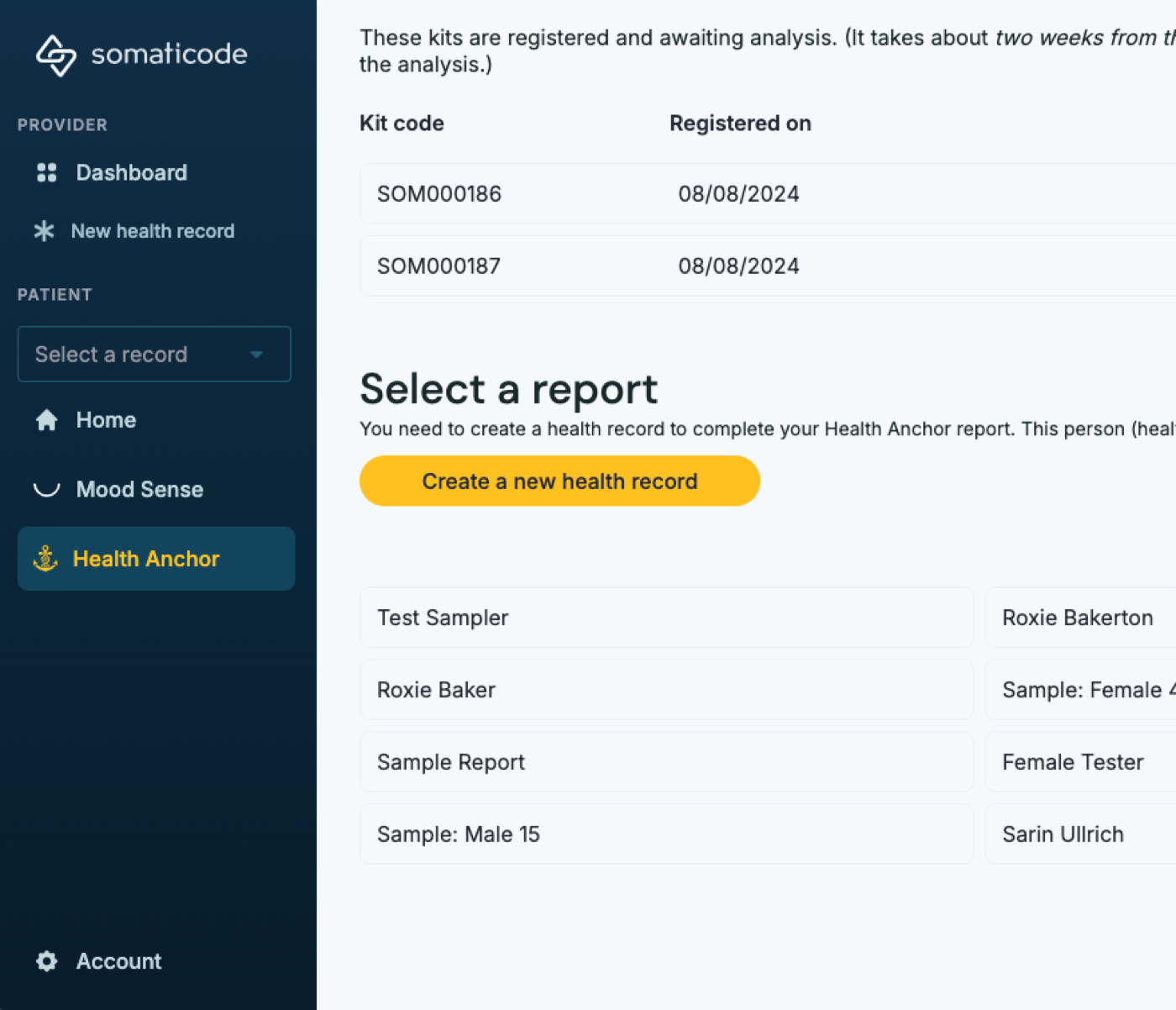
I designed Mood Sense, a novel at-home saliva test, end to end: packaging, pricing, off-market research, and practitioner research. Health Anchor, Somaticode's DNA test, shared the same kit-tracking system: registered kits awaiting lab analysis, then a completed report ready to select. I also trained an ML model to read user-submitted test result images, which pulled a manual review step out of fulfillment entirely.
Outcome
The customer base grew 400% after launch, and retention held as it scaled.
400%
Customer base growth after launch, with retention holding